29. Damnatio Memoriae
Damnatio memoriae means "condemnation of memory" in Latin and designates the official attempt to erase a person from history. In Bergamo, Casa Littoria -- a Fascist-era building now used for public and cultural activities -- condenses this tension between suppression and persistence of the past. For Interscape, I take Casa Littoria as a local anchor to weave together three kinds of memory: fascist, migrant, and botanical. As a migrant artist whose family moved from Germany to Brazil between the wars, I approach this site through the lens of displacement: which trajectories are absorbed and "naturalized", which are perceived as a threat, and which quietly fade from view.
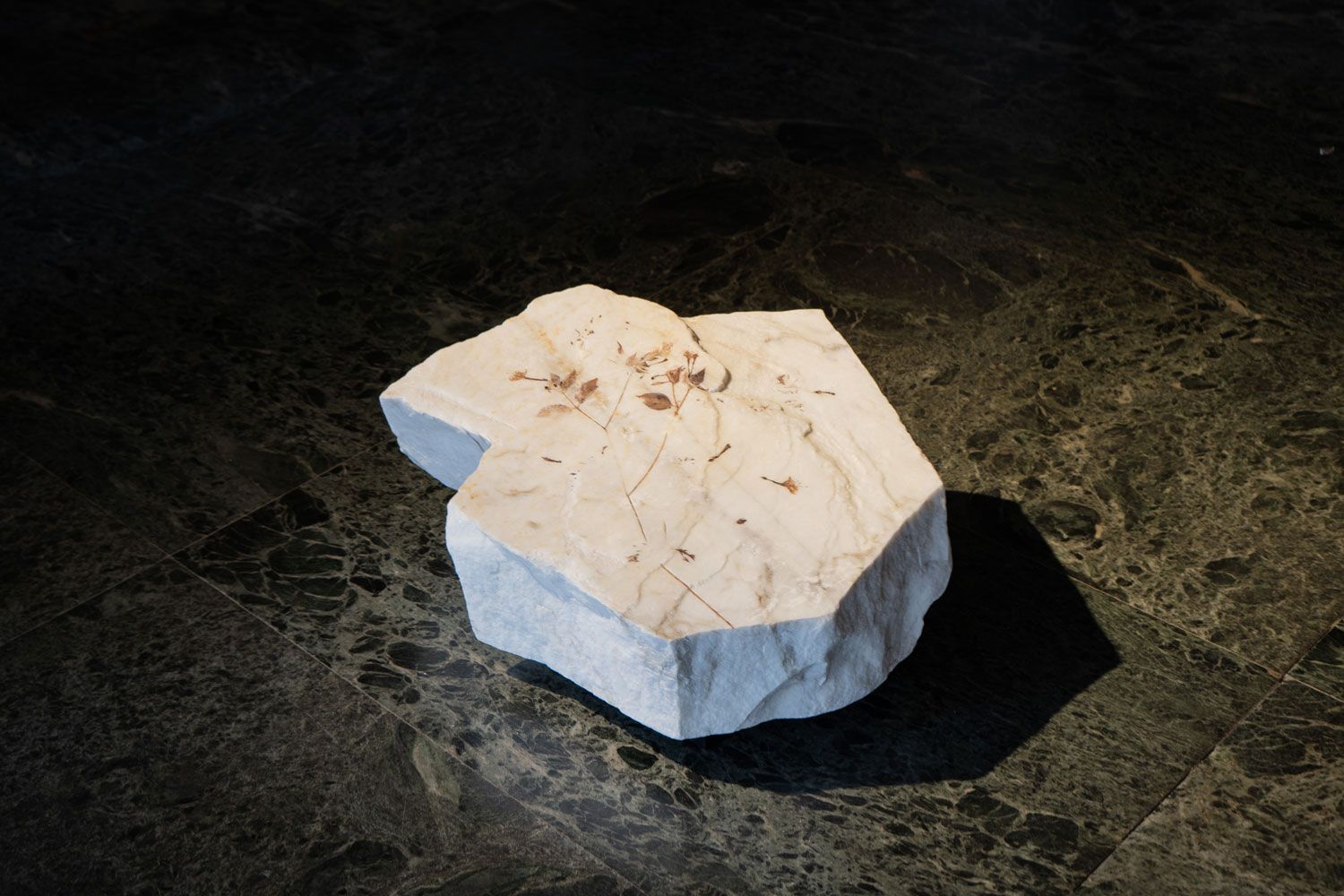
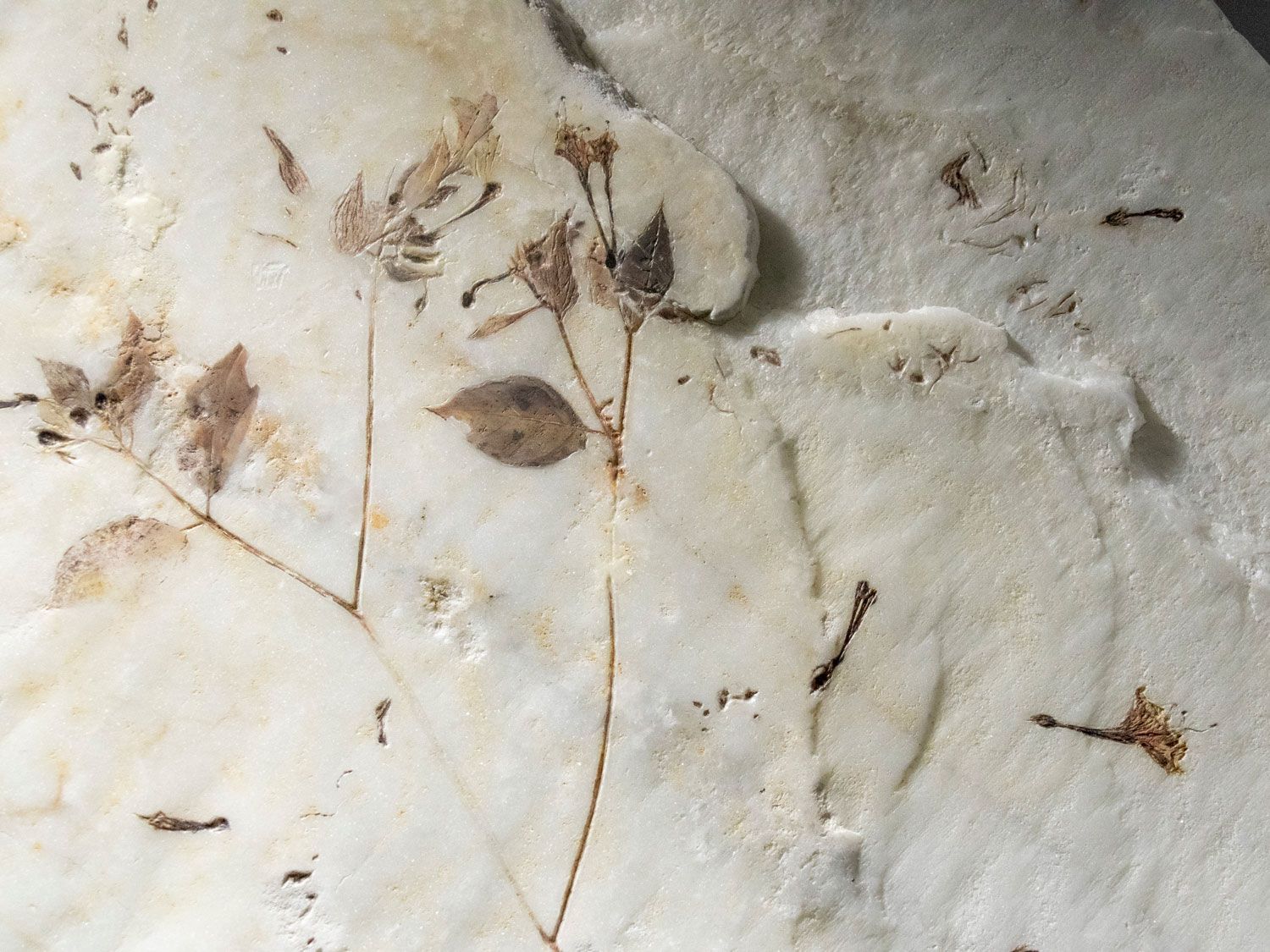
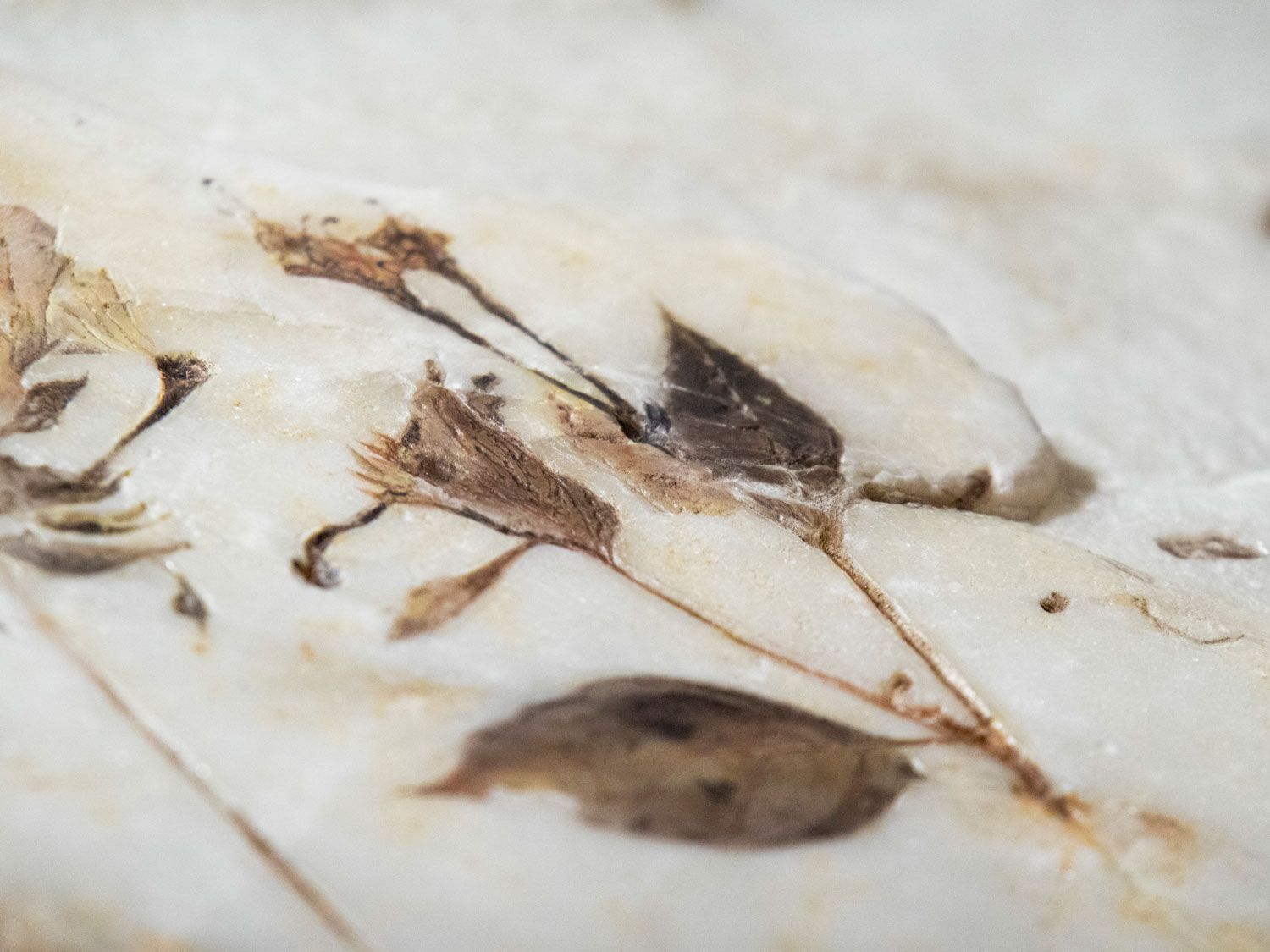
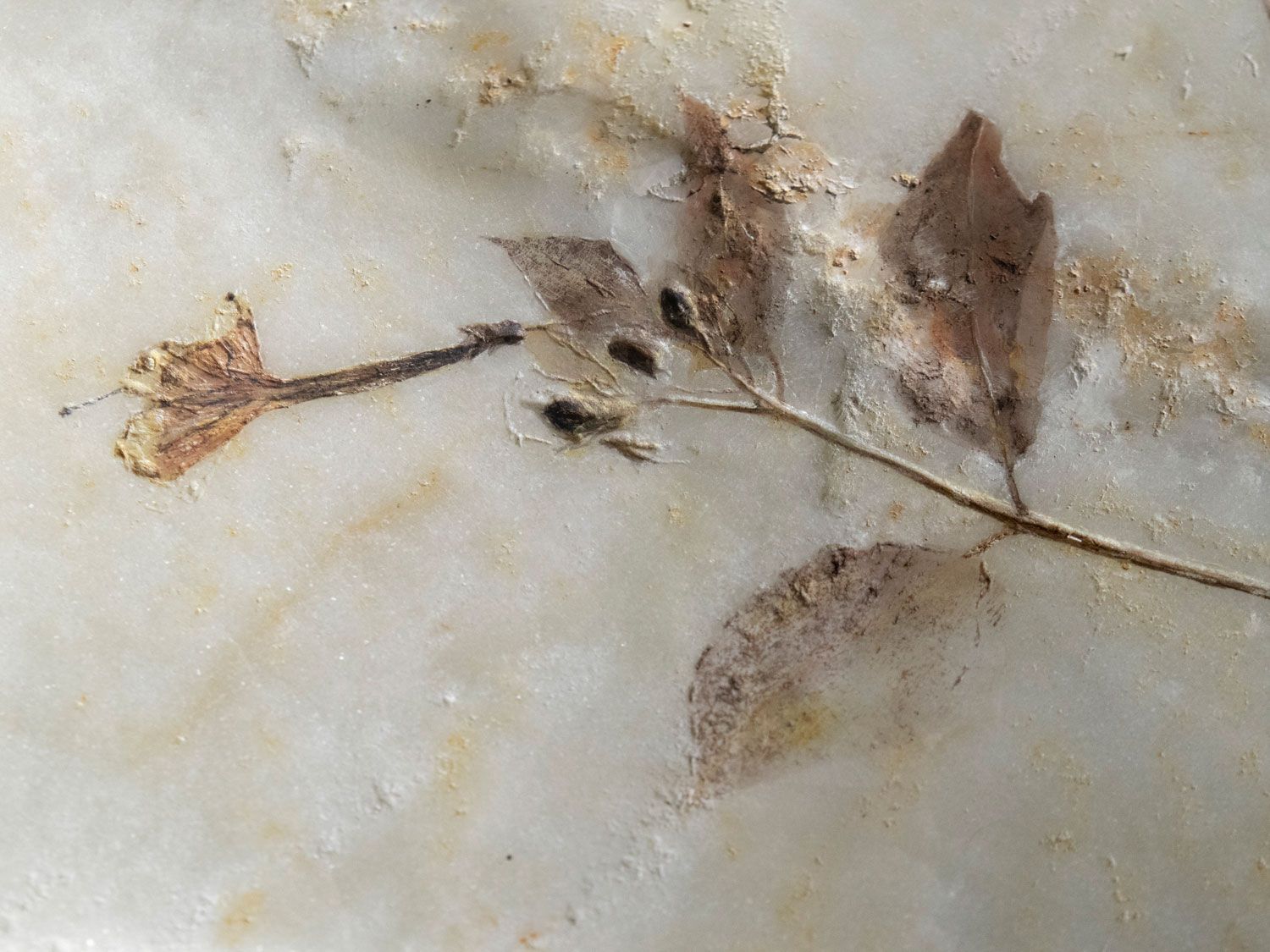
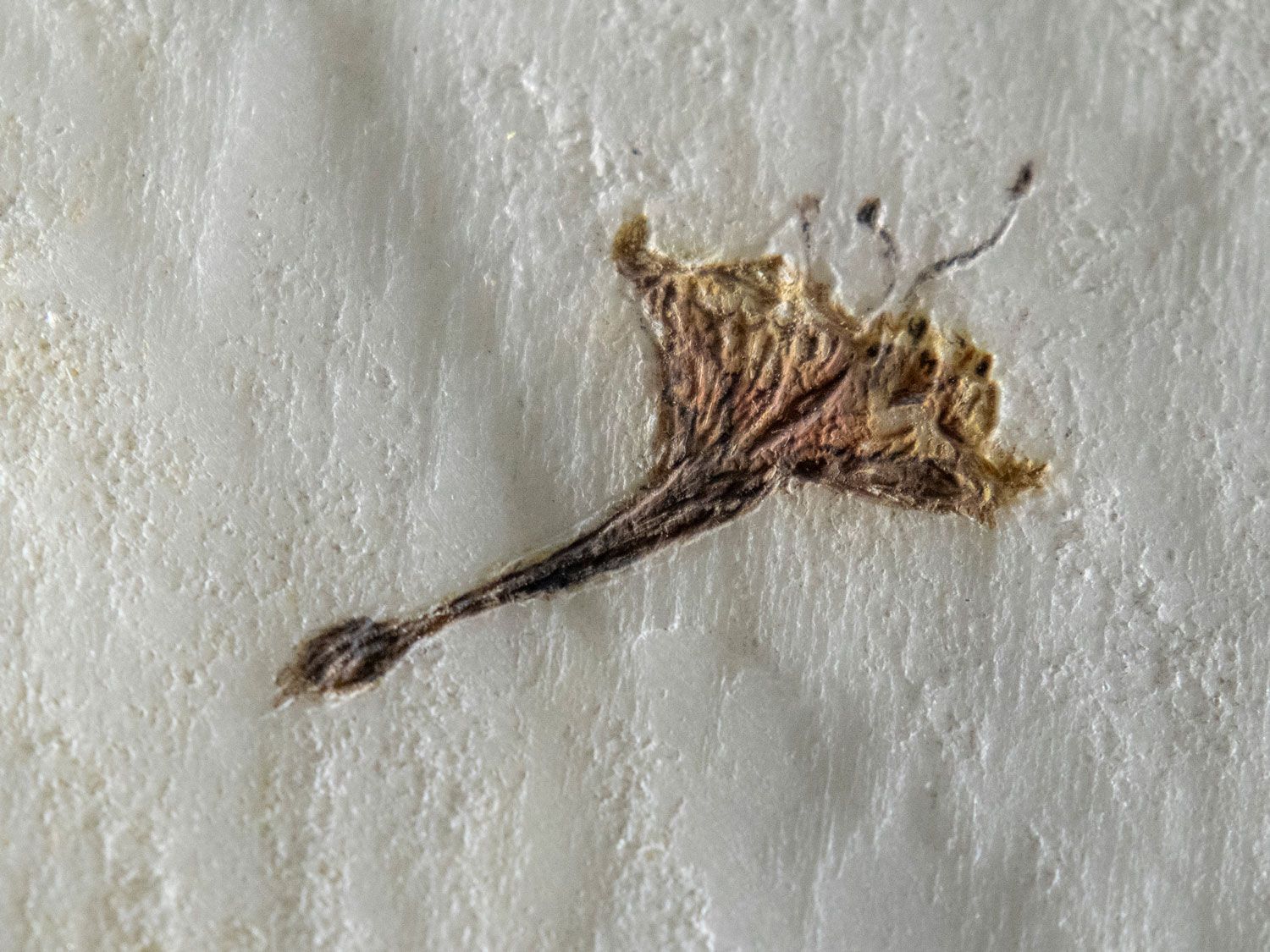
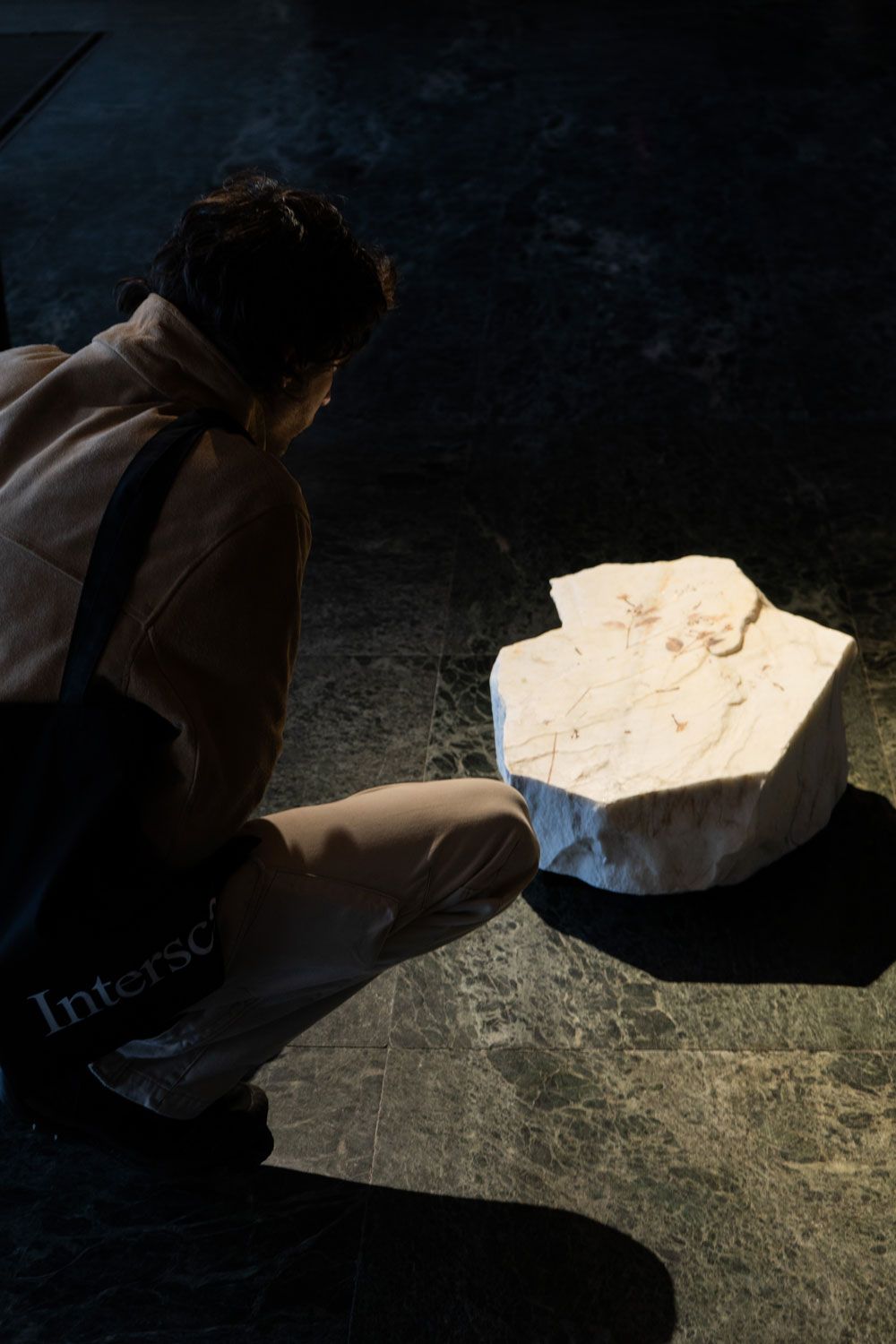
The work takes the form of a "contemporary archaeology": a block of Carrara marble bearing the painted and incision in low relief fossil of a Mirabilis jalapa. The fossil is fictitious, suggesting how history itself can be edited, reconstructed, or staged on the surface of things. Brought from the Americas around 1540, Mirabilis jalapa (marvel of Peru) was introduced in Europe as an exotic ornament and later became a naturalized, potentially invasive species. To naturalize an imported plant is a quiet form of violence that cuts its ties to place and botanical history. In this fictional fossil, architectural, migrant, and vegetal histories meet: what was meant to be absorbed, deleted, or overwritten remains inscribed as an ambiguous trace.