4. Sismografie di quartiere
Sismografie di quartiere is an environmental installation that brings together matter, memory, and transformation. A dense and layered work, crossed by tensions and contradictions, it does not offer answers but opens questions.
The project originates from an archival photograph held at the Museo del Novecento in Bergamo, documenting the demolition of the Zopfi factory in the 1970s. That event marked a profound rupture in the history of the neighborhood: more than a physical transformation, it was the loss of a system of relationships, identities, and collective life. The image of the rubble thus becomes a threshold through which to reflect on imposed transformations and their consequences over time.
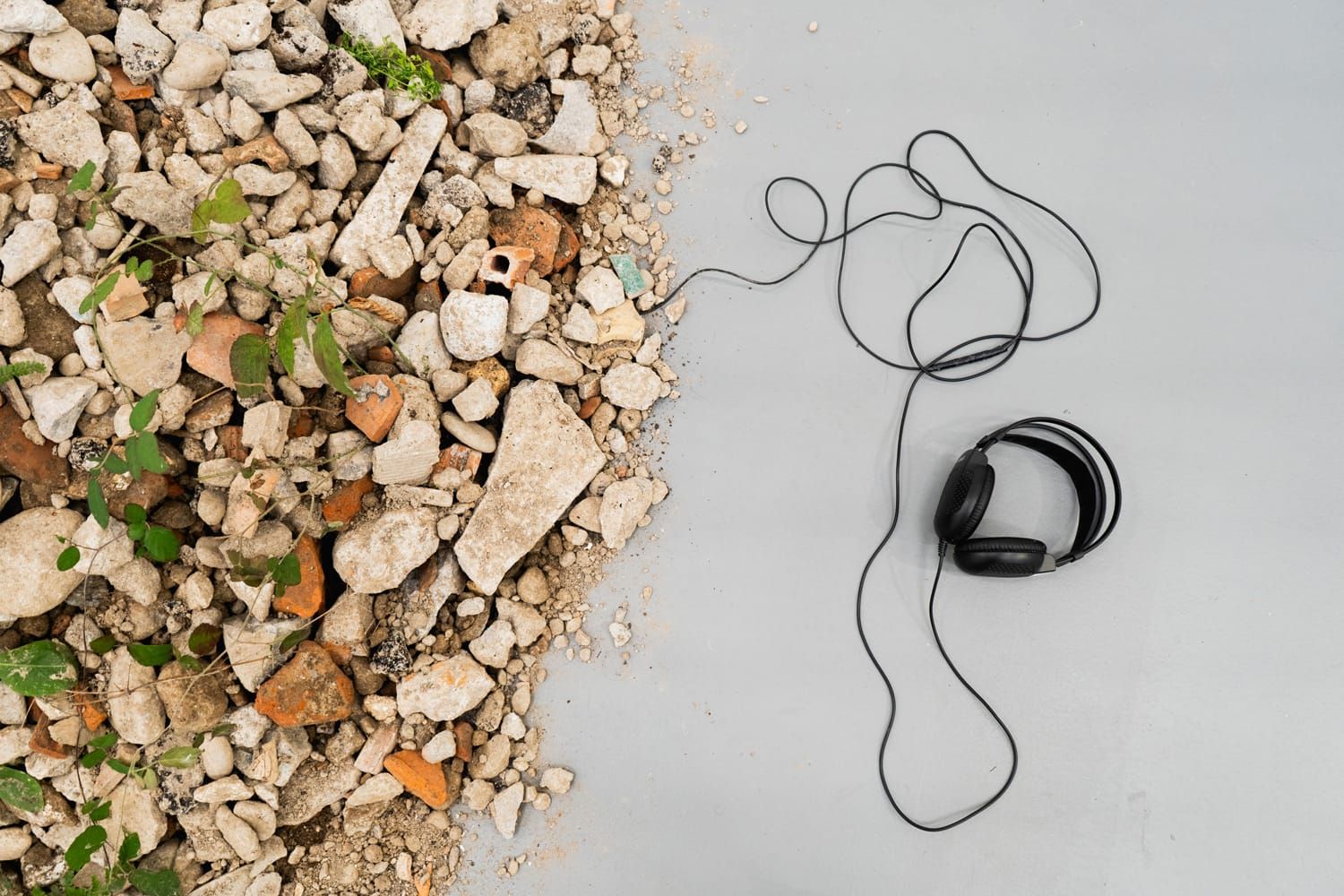
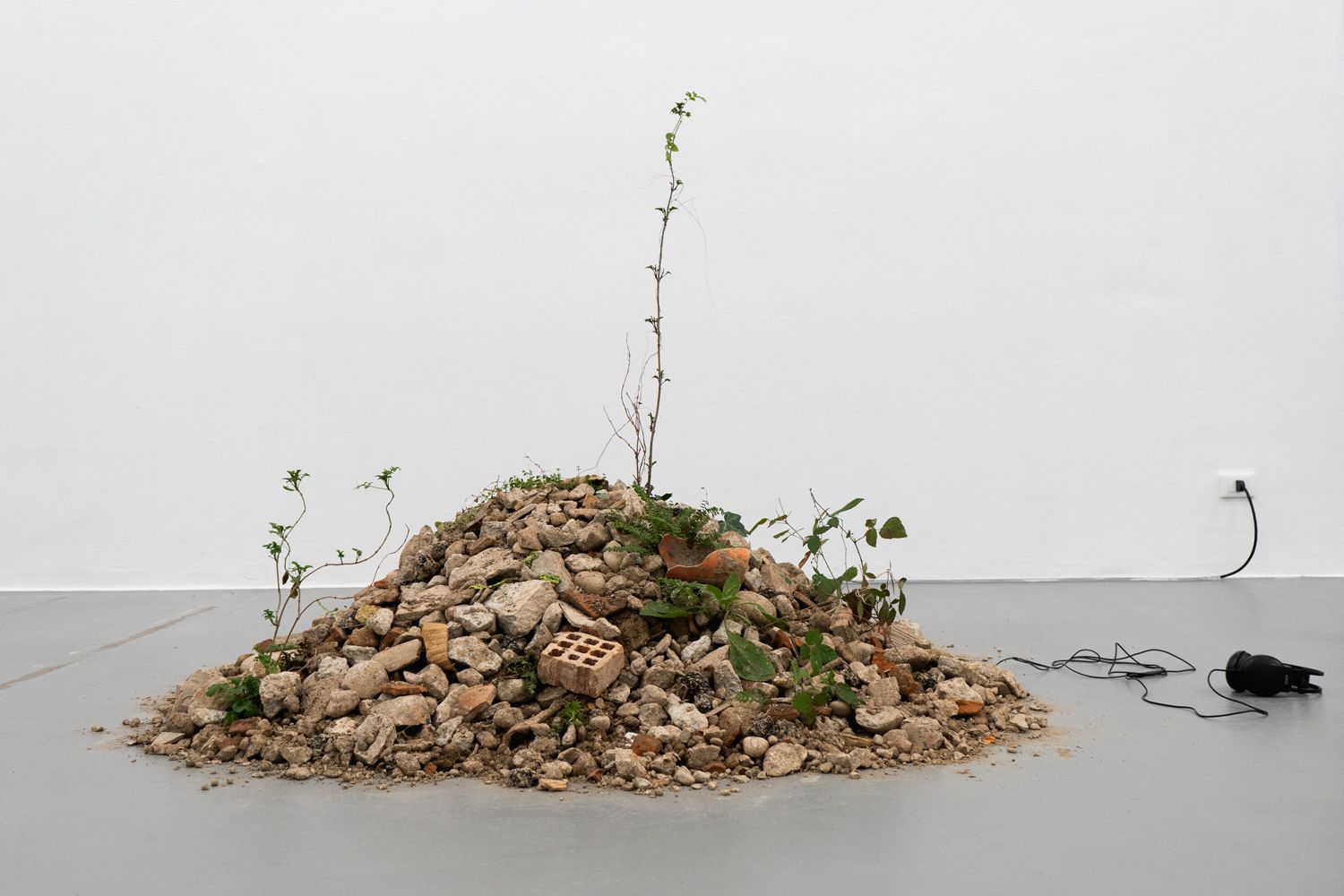
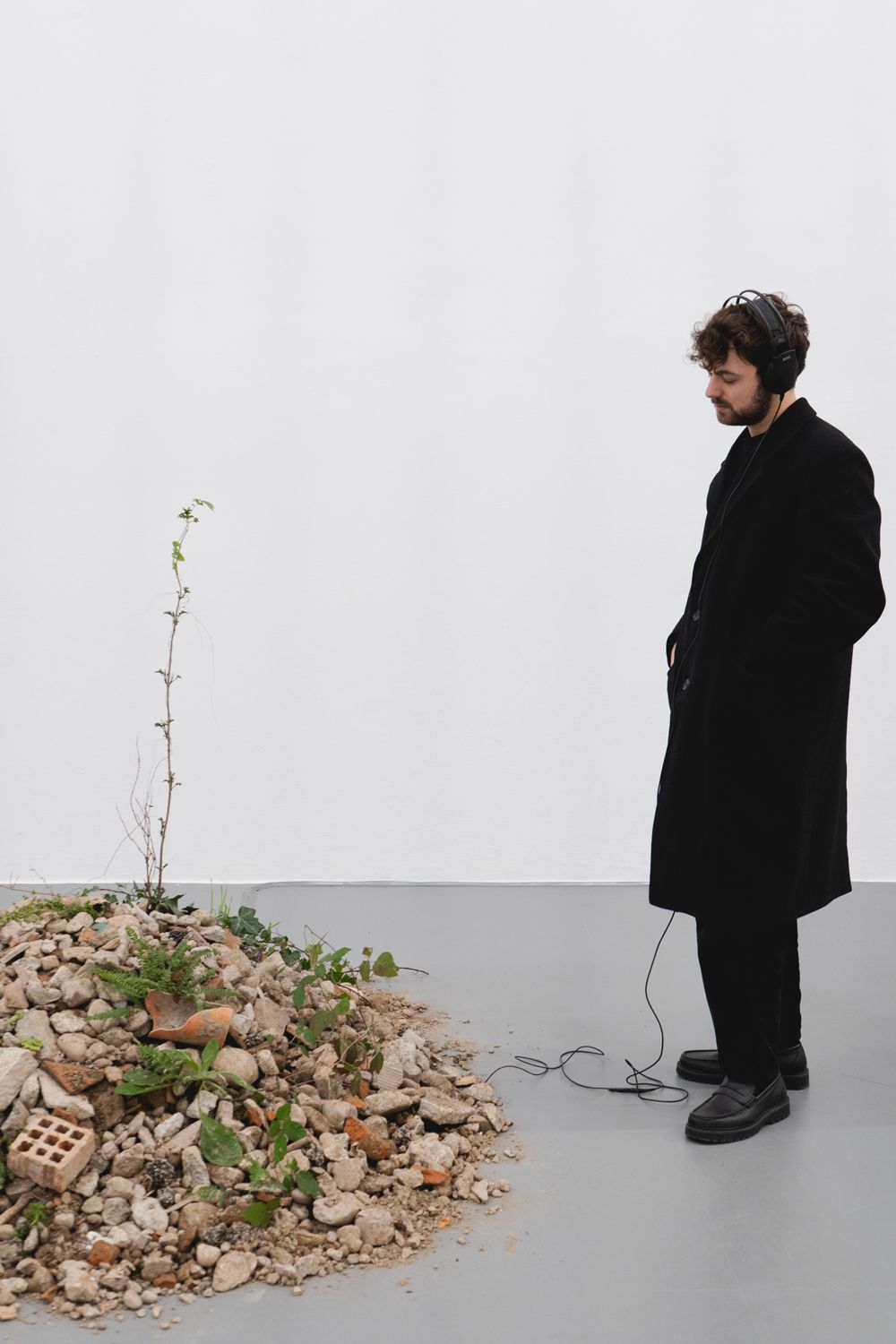
The installation consists of a mound of rubble from which ruderal plants grow. The pile takes the form of an unstable organism - a field of opposing forces where inert matter and life coexist in constant tension. The rubble stands as a sign of a trauma that continues to resonate. The work eschews the rhetoric of renewal, maintaining an intentional ambiguity between regeneration, adaptation, and the persistence of trauma.
A sound element accompanies the work as a perceptual and relational device. Sound neither describes nor guides; instead, it activates a state of listening. Through headphones protruding directly from the mound, listening becomes intimate and focused, akin to an auscultation - as if the viewer were invited to perceive the irregular heartbeat of this organism. The sound does not narrate; it suggests a body reacting and attempting to inhabit a compromised environment.
In Sismografie di quartiere, time is non-linear. Past, present, and future overlap, blurring the landscape's temporal position: what appears may be a resurfacing memory, a wound manifesting in the present, or a post-human image where life seeks new forms of equilibrium.
The reference to the Bergamo neighborhood is the catalyst for a broader movement. Like a seismic shock, the initial trauma propagates outward, opening onto universal questions: the relationship between urban transformation and social fractures, between memory and erasure, between destruction and possibility. The work does not offer solutions but poses questions, leaving the viewer to navigate a landscape in constant vibration.